

Two ERC Synergy Grants awarded to the Czech Academy of Sciences
06. 11. 2025
The first successful project bears the names of Leoš Valášek from the Institute of Microbiology of the Czech Academy of Sciences (CAS) and Julius Lukeš from the Biology Centre of the CAS. Together with international colleagues, they will pursue research that could lead to a better understanding of genetically determined rare diseases. The second project, led by Jan Zouplna from the Oriental Institute of the CAS, will focus on studying the political systems of countries in the MENA region.
Winning a Synergy Grant from the European Research Council (ERC) is no easy feat. This year, 712 proposals were submitted, with only one in ten succeeding in securing the ERC Synergy Grant. This type of grant supports interdisciplinary projects carried out by two to four scientists (Principal Investigators) from different institutions. The key to success is synergy between the participating researchers and their fields. Each winning project receives approximately EUR 10 million (about CZK 250 million). As mentioned on the ERC website, “Twenty-eight projects will involve grantees based in Germany, 24 in the United Kingdom, and 21 in both France and the United States. Six projects will include principal investigators in countries that have so far hosted relatively few ERC grants – the Czech Republic (3), Portugal (2), Cyprus (1), Estonia (1), and Hungary (1). More than 40% of the funded projects will involve one principal investigator based outside the EU and associated countries. Women represent around 25% of the researchers involved in the selected projects.”
3Stops2Go: From protozoa to patients
Rare diseases such as cystic fibrosis, Fanconi anemia, Hurler syndrome, or Duchenne muscular dystrophy are currently incurable. They belong to a group of disorders caused by a genetic defect known as a premature termination codon (PTC). This specific defect causes the premature termination of protein synthesis in essential genes by stopping the ribosome mid-process, resulting in truncated, nonfunctional proteins. Altogether, PTCs account for roughly eleven percent of all human genetic diseases.
Now, four researchers – Leoš Valášek and Julius Lukeš from the Czech Republic, Olivier Namy from France (Université Paris-Saclay, CEA, CNRS), and Mark Osborn from the USA (University of Minnesota) – have joined forces on a project titled 3Stops2Go.
“The standard genetic code has three stop codons that signal the end of protein synthesis. The name of our project – 3Stops2Go – refers to these three stop lights we need to overcome,” Leoš Valášek explains. His laboratory at the Institute of Microbiology of the CAS focuses on the regulation of gene expression, specifically the translation of genetic information, in which transfer RNA (tRNA) plays a key role.
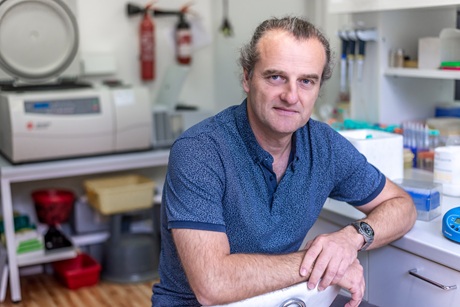
Leoš Valášek from the Institute of Microbiology of the CAS.
The goal of the research is to develop highly efficient, specialized tRNAs that will enable the production of intact, functional proteins. The scientists took inspiration from nature – from protozoa with unique genetic codes. “Recently, we discovered and described a protozoan that has effectively turned the genetic code upside down. To produce proteins, it evolved a structurally unique tRNA,” says Julius Lukeš, a parasitologist at the Biology Centre of the CAS.
The discovery of the protozoan Blastocrithidia nonstop was previously reported by the researchers in a study published in Nature (also covered on the CAS website). “By a twist of fate, this study brought us together with our colleagues from France and the United States. Over the past two years, we’ve collaborated not only on preparing this joint grant proposal, but also on preliminary experiments,” Lukeš adds.
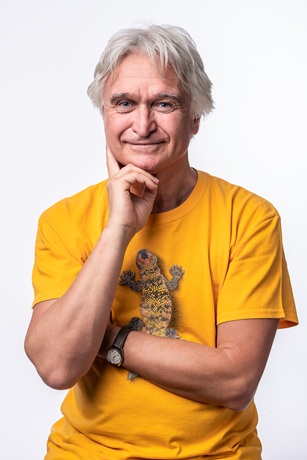
Julius Lukeš from the Biology Centre of the CAS.
You can also read an interview with Julius Lukeš we published in the 2024 English issue of A / Magazine (the interview first came out in Czech in the 2/2024 issue of A / Magazine).
CLOSER: Understanding the Post-Ottoman Space
CLOSER (abb. for Party Systems and Social Cleavages in the Post-Ottoman Space of the MENA Region) is the title of the second ERC Synergy Grant project. Approximately forty researchers are expected to take part and will focus on social conflict lines (known in political science as cleavages) and party systems in eight countries of the MENA region – Egypt, Israel, Jordan, Kuwait, Lebanon, Palestine, Tunisia, and Turkey. On the theoretical level, the project aims to enrich models developed mainly on the basis of Western European societies by confronting them with the environment of the MENA region. It follows developments from the Young Turk Revolution of 1908 to the present day.
“Among the original aspects of the project is the selection of countries itself – encompassing several Arab states, Turkey, and Israel – deliberately including countries with different political systems,” says Jan Zouplna. “In addition to addressing the specific relationship between the modern state and institutionalized religion in the local context and over the long term, the project also focuses more extensively on historically marginalized phenomena such as the existence of liberal parties and the role of socially sidelined groups, especially minorities and women,” adds Zouplna from the Oriental Institute of the CAS, who is the principal investigator for this project on behalf of the CAS. The other PIs are Clément Steuer from the Institute of International Relations Prague and Gilles Van Hamme from the Université Libre de Bruxelles.
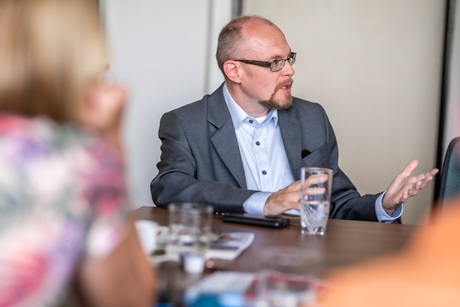
Jan Zouplna from the Oriental Institute of the CAS.
Last year, an ERC Synergy Grant was also awarded to the STARMORPH project, led on the Czech side by Ondřej Novák from the Institute of Experimental Botany of the CAS. We covered his research in our English article, first published in Czech in the 3/2024 issue of A / Magazine.
Written and prepared by: Leona Matušková, External Relations Division, CAO of the CAS, drawing on the CAS press release
Translated by: Tereza Novická, External Relations Division, CAO of the CAS
Photo: Shutterstock, Jana Plavec, External Relations Division, CAO of the CAS
Read also
- Twenty years of EURAXESS: Supporting researchers in motion
- Researching scent: Cleopatra’s legacy, Egyptian rituals, and ancient heritage
- The secret of termites: Long-lived social insects that live in advanced colonies
- Nine CAS researchers received the 2025 Praemium Academiae and Lumina Quaeruntur
- Step inside the world of research: Week of the Czech Academy of Sciences 2025
- A / Magazine: Bugs, the rusting human body, and beauties from the kingdom of ice
- PHOTO STORY: The invasive black bullhead catfish threatens Czech fishponds
- Rewrite the textbooks – we’ve found a bone; aka When science takes a wild turn
- CAS researchers receive L’Oréal-UNESCO Award and Forbes recognition
- Young scientists discussed economic challenges with Nobel laureates in Lindau
The Czech Academy of Sciences (the CAS)
The mission of the CAS
The primary mission of the CAS is to conduct research in a broad spectrum of natural, technical and social sciences as well as humanities. This research aims to advance progress of scientific knowledge at the international level, considering, however, the specific needs of the Czech society and the national culture.
President of the CAS
Prof. Eva Zažímalová has started her second term of office in May 2021. She is a respected scientist, and a Professor of Plant Anatomy and Physiology.
She is also a part of GCSA of the EU.